
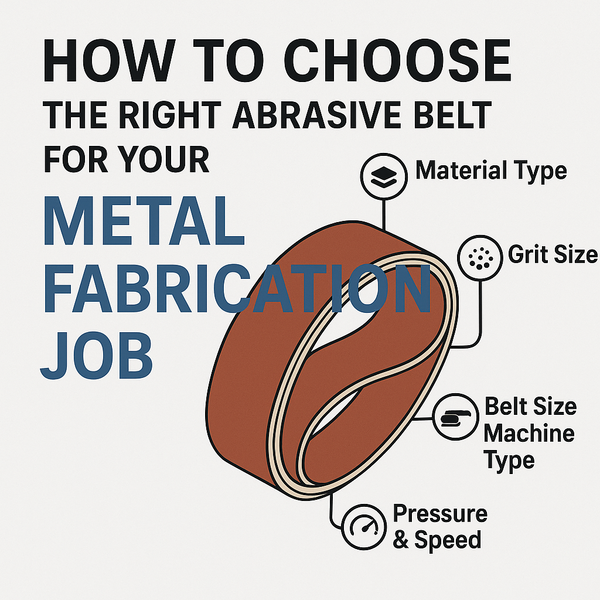
In metal fabrication, choosing the correct abrasive belt is the difference between a flawless finish and costly rework. The right belt improves surface quality, speeds production, and reduces waste — while the wrong one burns, clogs, or wears out prematurely.
At OnlineSupply.ca, we offer a wide range of custom-made abrasive belts made in Canada, built from premium European and South Korean materials. Here’s how to pick the best belt for your job.
Understanding Abrasive Belt Basics
An abrasive belt consists of three key components:
-
Backing: Paper or cloth — each offering different flexibility and durability.
-
Paper backings are lightweight and economical, ideal for finer grits and finishing applications. They’re rated by weight:
-
A, B, C, D weights are thinner and more flexible and are more common in sanding discs and sheets
-
E and F weights are thicker, offering greater tear resistance for moderate-pressure sanding, typically on a belt sander
-
-
Cloth backings are stronger and more tear-resistant than paper, making them suitable for heavy-duty and high-pressure applications. Common grades include:
-
J-weight: Light and flexible, perfect for contour sanding or hand-held tools.
-
X-weight: Medium strength, used for general-purpose belt sanding.
-
Y-weight: Heavy duty, for aggressive grinding or high-pressure metalworking.
-
-
-
Bond: Resin or glue that holds the grit in place. Resin-over-resin types handle higher heat and pressure.
- Abrasive Grain: Aluminum oxide, zirconia alumina, ceramic, or silicon carbide — the most critical factor in cutting performance.
| Material | Best For | Characteristics |
|---|---|---|
| Aluminum Oxide | General purpose, mild steel, wood | Affordable, versatile |
| Zirconia Alumina | Stainless steel, high pressure | Self-sharpening, long life |
| Ceramic | Hardened steels, titanium, tool steels | Cool cutting, aggressive |
| Silicon Carbide | Non-ferrous metals, composites | Sharp, fast-cutting but brittle |
Key Factors to Consider When Selecting a Belt
1. Material Type
Different metals respond differently to heat and pressure. For example:
-
Stainless steel benefits from ceramic or zirconia belts for cooler, longer grinding.
-
Aluminum works best with open-coat aluminum oxide or silicon carbide to avoid loading.
-
Carbon steel is well served by zirconia or aluminum oxide belts.
2. Grit Size
-
Coarse (16–60 grit): Rapid stock removal.
-
Medium (80–120 grit): Deburring and blending.
-
Fine (150–400 grit): Surface finishing and polishing.
-
Ultra Fine (400 grit +): For extremely fine finishes
3. Belt Size & Machine Type
Always match belt dimensions to your equipment. Improper size can reduce tracking accuracy and cause premature joint failure.
4. Pressure & Speed
High-pressure applications (like stainless grinding) require a stronger backing and resin bond, while lighter finishing benefits from flexible cloth backings.
Signs You’re Using the Wrong Belt
-
Rapid glazing or dulling
-
Belt loading or burning
-
Uneven finish
-
Excessive vibration or joint failure
Switching to a different grit or grain type often resolves these issues immediately.
How to Extend Belt Life
-
Use correct tension and avoid over-tightening.
-
Clean belts regularly with a rubber cleaning stick.
-
Allow belts to cool between runs.
-
Store in a dry, temperature-stable environment.
-
Mark used belts by grit and usage for proper rotation.
Canadian-Made Quality, Fast Turnaround
Our Fast Track Custom Sanding Belts are made in Canada within 7 working days, using premium materials from Europe and South Korea — ideal for shops tired of border delays and long factory lead times.
Conclusion
The perfect abrasive belt depends on the material, finish, and equipment — but with the right guidance, you can achieve faster production, lower costs, and superior finishes.
For help choosing the right belt, contact our technical team or request a custom quote today.
 Posted by
Robert McDonald
Posted by
Robert McDonald
Robert McDonald is the founder and president of Skookum Tools Ltd. and the driving force behind Skookum Tools and Online Supply, a premier e-commerce destination for industrial supplies. With over three decades of experience in the tooling and supply industry, Robert has cultivated a deep understanding of the unique needs of manufacturers, tradespeople, and hobbyists alike.
A passionate advocate for quality craftsmanship, Robert's journey began with a commitment to delivering top-tier tools and supplies to empower his customers to achieve exceptional results. Robert's expertise ensures that Skookum Tools offers a curated selection of reliable, high-performance products.
Robert enjoys sharing insights on efficiency, innovation, and industry trends. His writing reflects his dedication to helping customers succeed, whether they’re tackling DIY projects or managing large-scale industrial operations.

