Double-Ended End Mills: What Are They and When Should You Use One?
When selecting an end mill, getting the right cutting geometry is only part of the equation. Tool reach, rigidity, flute count and overall value can all affect which option makes the most sense for the job.
For many shallow milling applications, a double-ended end mill offers a practical advantage: two usable cutting ends on a single tool. Once one end reaches the end of its usable life, the tool can be flipped to provide a fresh cutting end.
That sounds simple—and it is—but double-ended end mills aren’t automatically the best choice for every setup. Understanding their benefits and limitations will help you decide when two cutting ends make more sense than one.
What Is a Double-Ended End Mill?
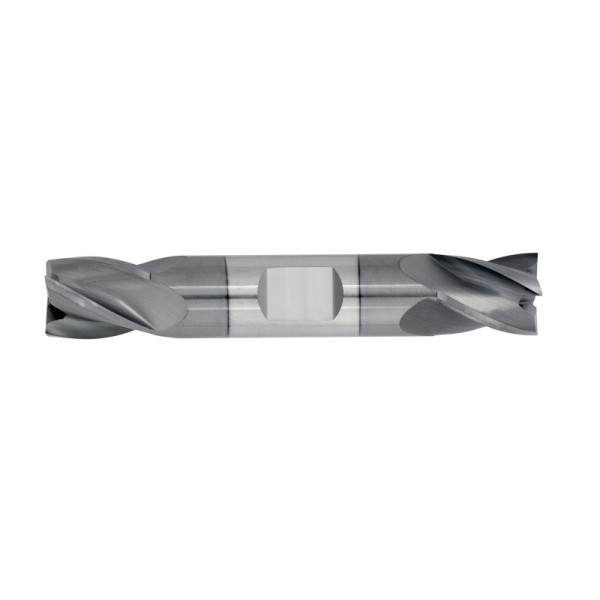
A double-ended end mill has cutting geometry on both ends of the tool, with a central shank area designed to be secured in the toolholder.
Only one end is used at a time. When the first cutting end becomes worn or damaged, the end mill can be removed, flipped and reinstalled so the second end can be used.
This gives machinists two cutting ends in a compact format, potentially reducing the cost per usable cutting edge without requiring two separate tools.
What Are the Benefits of Double-Ended End Mills?
Two Usable Cutting Ends
The most obvious advantage is right there in the name. Instead of discarding the entire tool when one end becomes worn, you still have another cutting end available.
While this doesn’t necessarily mean twice the tool life in every application, it can provide better overall tooling value when both ends are used properly.
A Compact, Rigid Design
Double-ended end mills are generally designed for applications that do not require extended reach or a long cutting length. Their compact construction can help maintain rigidity and reduce tool deflection when machining close to the toolholder.
Less deflection can contribute to:
- More consistent cuts
- Improved dimensional accuracy
- Better surface finishes
- Reduced chatter
- More predictable tool performance
Rigidity still depends on the complete setup, including tool diameter, stick-out, toolholding, machine condition, cutting parameters and the material being machined.
Convenient Tooling for Repeat Work
For repeat jobs, having a second cutting end immediately available can simplify tooling preparation. When one end becomes worn, the tool can be flipped and returned to service without pulling a completely separate end mill from inventory.
This can be particularly useful for shops that regularly perform the same shallow profiling, slotting or finishing operations.
Better Use of Tooling Storage
Because two cutting ends are combined into one tool, double-ended end mills can reduce the number of individual tools needed in storage. That may be a small advantage for one tool, but it can add up when maintaining inventory across multiple diameters and flute configurations.
When Should You Use a Double-Ended End Mill?
Double-ended end mills are best suited to applications where the required cutting length and reach are relatively short.
Depending on the end mill’s specific geometry, common applications may include:
- Shallow slotting
- Side milling
- Profiling
- Finishing passes
- Small features
- Repeat production work
- General milling where extended reach is unnecessary
Before using an end mill for ramping or plunging, confirm that the tool is designed with the appropriate centre-cutting geometry. Not every end mill is intended to cut directly downward into the workpiece.
Double-Ended vs. Single-Ended End Mills
Both styles have a place in the tool crib. The better option depends on the workpiece, setup and required depth of cut.
| Double-Ended End Mills | Single-Ended End Mills |
|---|---|
| Provide two usable cutting ends | Provide one cutting end |
| Can offer a lower cost per cutting end | Offer more flexibility in overall tool geometry |
| Well suited to short-reach applications | Better suited to deep pockets and extended-reach work |
| Compact design can support rigidity | Available with longer flute and reach options |
| Convenient for repeat, shallow operations | Often preferred when additional clearance is required |
If your operation can be completed comfortably within the cutting length and reach of a double-ended tool, the second cutting end may make it the more economical option.
If the setup requires deep pocketing, long reach, additional holder clearance or a longer length of cut, a single-ended end mill will generally be the better choice.
How to Choose a Double-Ended End Mill
The number of cutting ends may get the attention, but the rest of the tool still needs to match the application. Consider the following factors before making your selection.
Cutting Diameter
The end mill diameter affects the size of the feature being machined, tool strength, material removal rate and the cutting parameters required. Select a diameter that suits both the workpiece geometry and the capabilities of your machine.
Length and Depth of Cut
Confirm that the cutting length is sufficient for the operation without exceeding the tool’s intended capabilities. Double-ended end mills are most practical when the work can be performed with a relatively short cutting length.
Trying to force a short tool into a deep application can lead to poor results, tool damage or interference between the toolholder and the workpiece.
Flute Count
Flute count affects tool strength, chip evacuation and the amount of cutting-edge engagement.
End mills with fewer flutes provide more room for chips to escape, while higher flute counts place more cutting edges in contact with the material. The right choice depends on the workpiece material, operation, machine and cutting parameters.
Tool Material and Coating
The carbide grade and coating should be compatible with the material being machined. The right combination can improve wear resistance, reduce heat-related damage and support longer, more consistent tool life.
The best coating isn’t simply the most advanced option—it’s the one suited to the material and operating conditions.
Toolholder and Setup Clearance
Because the tool has cutting geometry on both ends, verify that the central shank area can be held securely and that the complete setup provides adequate clearance.
Always follow the toolholder manufacturer’s recommendations and avoid clamping directly onto cutting edges unless the tool is specifically designed for it.
Getting Full Value From Both Cutting Ends
A double-ended end mill only provides its full value if the second end remains protected and usable.
Before installing or flipping the tool:
- Inspect both cutting ends for chips or damage
- Clean the tool and toolholder thoroughly
- Confirm that the central shank is held securely
- Minimize unnecessary tool stick-out
- Use cutting parameters appropriate for the material and tool
- Store the tool so the unused end is protected
- Clearly mark or track which end has already been used
A chipped unused end isn’t much of a backup, so double-ended tools should be handled carefully during installation, removal and storage.
Are Double-Ended End Mills Worth It?
When the application suits their compact design, double-ended end mills can provide excellent overall value. They offer two usable cutting ends, support rigid short-reach setups and can reduce the cost per cutting end.
However, the value comes from choosing the right tool—not simply choosing the one with more ends.
For shallow operations, repeat work and setups where additional reach is unnecessary, a double-ended end mill can be a smart and economical addition to the tool crib. For deep pockets, longer cutting lengths or difficult-to-reach features, a single-ended option will usually provide the clearance and flexibility the job requires.
Find the Right End Mill for Your Application
Skookum End Mills are designed for professional metalworking, precision machining and dependable performance. Explore our selection of double-ended solid carbide end mills to find the diameter, flute count and cutting dimensions that fit your next job.
Not sure which end mill you need? Contact the Skookum Tools team and we’ll help you narrow down the options.